Cantaloupe melon is nutritious, delicious, and versatile.
At 60 calories and no fat per 1-cup serving, the cantaloupe can add potent nutrients and sweetness to a healthy eating plan. The humble cantaloupe may not get as much respect as other fruits, but it should. While adding fruit of any kind to your diet can be beneficial, cantaloupe may be a particularly good choice. This tasty variety of musk melon is packed with nutrients. If you don’t think about nabbing a cantaloupe each time you hit your grocery store’s produce section, read on to learn why you may want to think again.
1. Beta-carotene
When it comes to beta-carotene, cantaloupe knocks other yellow-orange fruits out of the park. According to the United States Department of Agriculture (USDA)Trusted Source, cantaloupe has more beta-carotene than: • apricots • grapefruit • oranges • peaches • tangerines • nectarines • mangoes Beta-carotene is a type of carotenoid. Carotenoids are pigments that give fruits and vegetables their bright colours. The body either converts beta-carotene into vitamin A or uses it as a powerful antioxidant to help fight free radicals that attack cells. Vitamin A is important to: • eye health • red blood cells • a healthy immune system
2. Vitamin C
According to the USDA Trusted Source, 1 cup of cantaloupe contains around 17 milligram (mg) of vitamin C. The recommended dietary allowance (RDA) of vitamin C for people ages 19 years and older is 90 to 120 mg Trusted Source, depending on factors such as whether the person is pregnant or lactating. Vitamin C is involved in Trusted Source: • collagen • immune support • protein metabolism
3. Folate
Folate is also known as vitamin B9. Folate is the term people use when this vitamin is naturally present in foods. Folic acid is the term for vitamin B9 supplements and fortified foods. Folate is well-known for preventing neural tube congenital anomalies (sometime called birth defects) like spinal bifida. Generally, the RDA of folate for people ages 14 years and older is 400 mg Trusted Source. The RDA is higher if a person is pregnant or lactating. Two cups of cantaloupe contain 44 mg Trusted Source of folate, or around 11% of the RDA for an adult who isn’t pregnant or lactating.
4. Water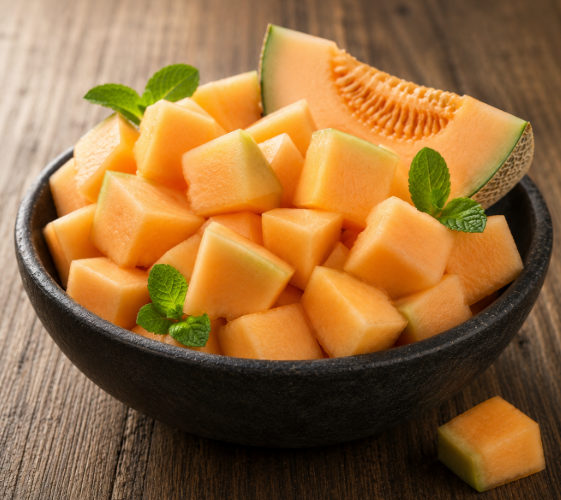
Like most fruits, cantaloupe has a high water content. Eating cantaloupe helps you stay hydrated throughout the day, which is important for heart health. When you’re hydrated, your heart doesn’t have to work as hard to pump blood. Staying hydrated also supports: • skin health • kidney function • weight management • immune health Mild dehydration may cause: • dizziness • headache • reduced urination • dry skin • dry mouth • constipation Severe dehydration may be serious and lead to: • a rapid heart rate • low blood pressure • confusion • unconsciousness • shrivelled skin Dehydration is also a risk factor for developing kidney stones. While drinking water is your best bet for staying hydrated, eating water-rich fruits like cantaloupe can also help.
5. Fiber
The health benefits of fibre go beyond preventing constipation. For example, a high fiber diet may reduce your risk of heart disease and diabetes. Eating enough fibre may also help people seeking to lose weight by making them feel fuller for longer.
6. Potassium
One wedge of a medium-sized cantaloupe provides 4%Trusted Source of your potassium RDA. Potassium is an essential electrolyte mineral. According to the American Heart Association Trusted Source, potassium helps keep the right water balance between cells and body fluids. Potassium is also vital to nerve health and proper muscle contraction. Eating a potassium-rich snack like cantaloupe after exercise can help replenish depleted electrolytes. Other vitamins and minerals One cup of cantaloupe contains 1.3 grams Trusted Source of protein and small amounts of many vitamins and minerals, including: • vitamin K • niacin • choline • calcium • magnesium • phosphorous • zinc • copper • manganese • selenium
These components make cantaloupe a nutritious fruit choice.
How to choose a cantaloupe
Cantaloupes may be available year-round, but this melon is at its freshest and sweetest during the summer.
When choosing a ripe cantaloupe, look for one that’s symmetrical and feels slightly heavy.
The colour should be a creamy, light yellow-orange with little to no green.
Ripe cantaloupe should smell sweet and a little musky.
For the freshest taste, use your cantaloupe within 3 days of purchase.
Ways to use cantaloupe Cantaloupes are delicious on their own or in a fruit salad, but there are other surprising ways to use them.
Here are a few examples:
Cantaloupe smoothie:
A smoothie made from cantaloupe, Greek yogurt, and natural sweetener makes a great breakfast or snack.
Cantaloupe salad:
Combining cantaloupe in a salad with basil, mozzarella, onions, red wine vinegar, and olives gives the fruit a Savory kick.
Cantaloupe sorbet:
You only need four ingredients to make this frosty treat: cantaloupe, lemon, honey, and water. Roasted cantaloupe:
Roasting cantaloupe brings out the melon’s natural sweetness.
The takeaway When it comes to melons, you can’t do much better than the cantaloupe.
It’s nutritious, delicious, and versatile.
If you typically buy watermelon or honeydew melon and shy away from cantaloupe, you might be missing out.
At around 60 calories Trusted Source and no fat per 1-cup serving, cantaloupe can be a smart way to get potent nutrients and sweetness into your healthy eating plan.
Credit to:
https://www.healthline.com/health/food-nutrition/benefits-of-cantaloupe#ways-to-use-cantaloupe